Requirements for the collection point

Here you will find the key principles for setting up the collection area, along with practical solutions that work well in everyday operations.

Safe and efficient collection starts here

The collection point is the contact point between you as a farmer and Daka. When conditions are in order, collection can be carried out safely and efficiently.

Good conditions also contribute to high biosecurity, a better working environment and a proper and professional outward image.
Collection point requirements

A collection point must both comply with legislation and work for practical collection.

Therefore, we distinguish below between legal requirements and Daka's requirements for access, placement and occupational health and safety.

Daka’s requirements for the collection point

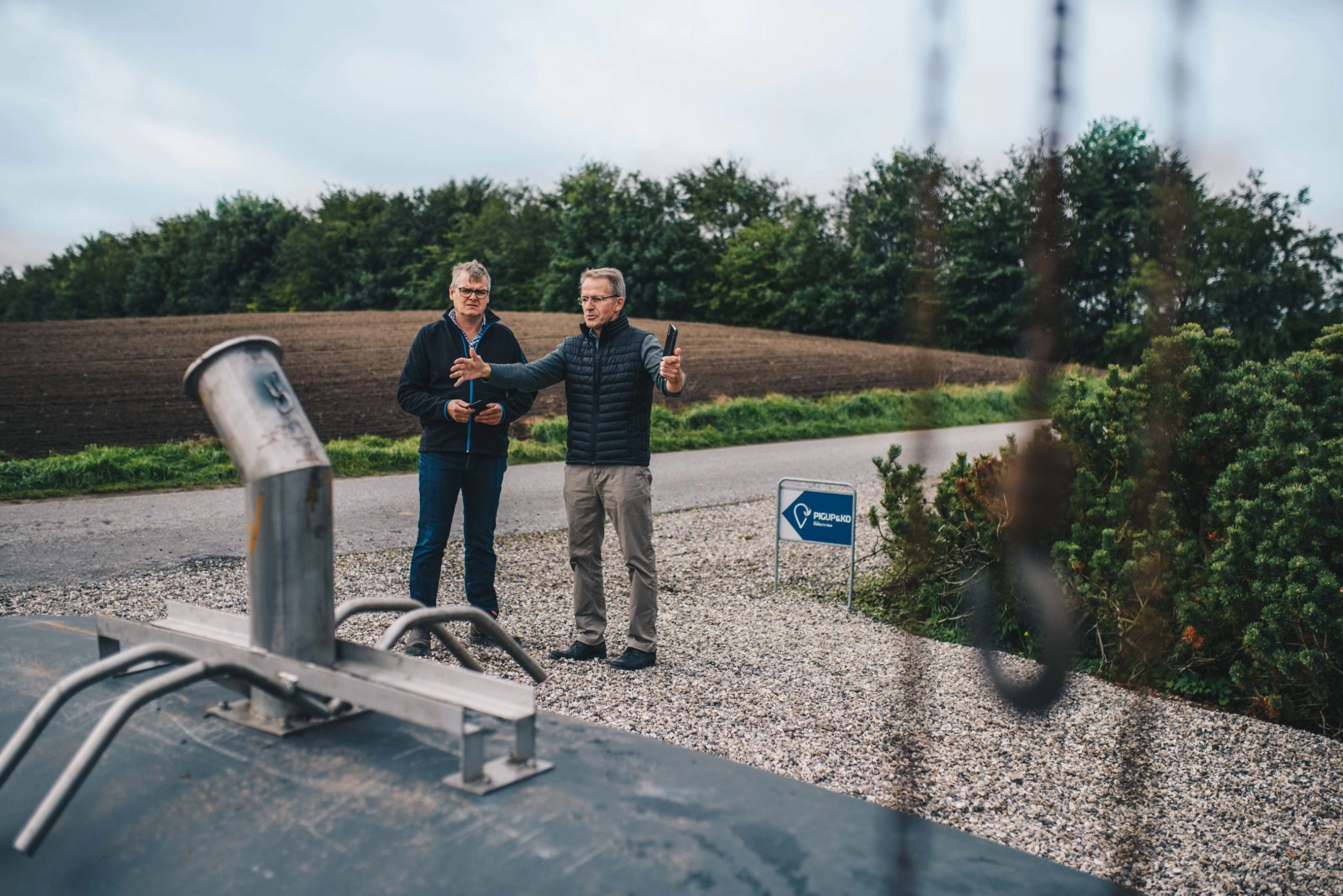
Collection will be carried out using a large, heavy lorry. The access road must therefore be of sufficient width, have adequate load-bearing capacity and allow unobstructed access to the collection point.

The lorry must be able to arrive safely without the risk of getting stuck or causing damage to equipment and the surroundings.

There must be sufficient space for the lorry to be positioned correctly during collection and subsequently leave the property safely.

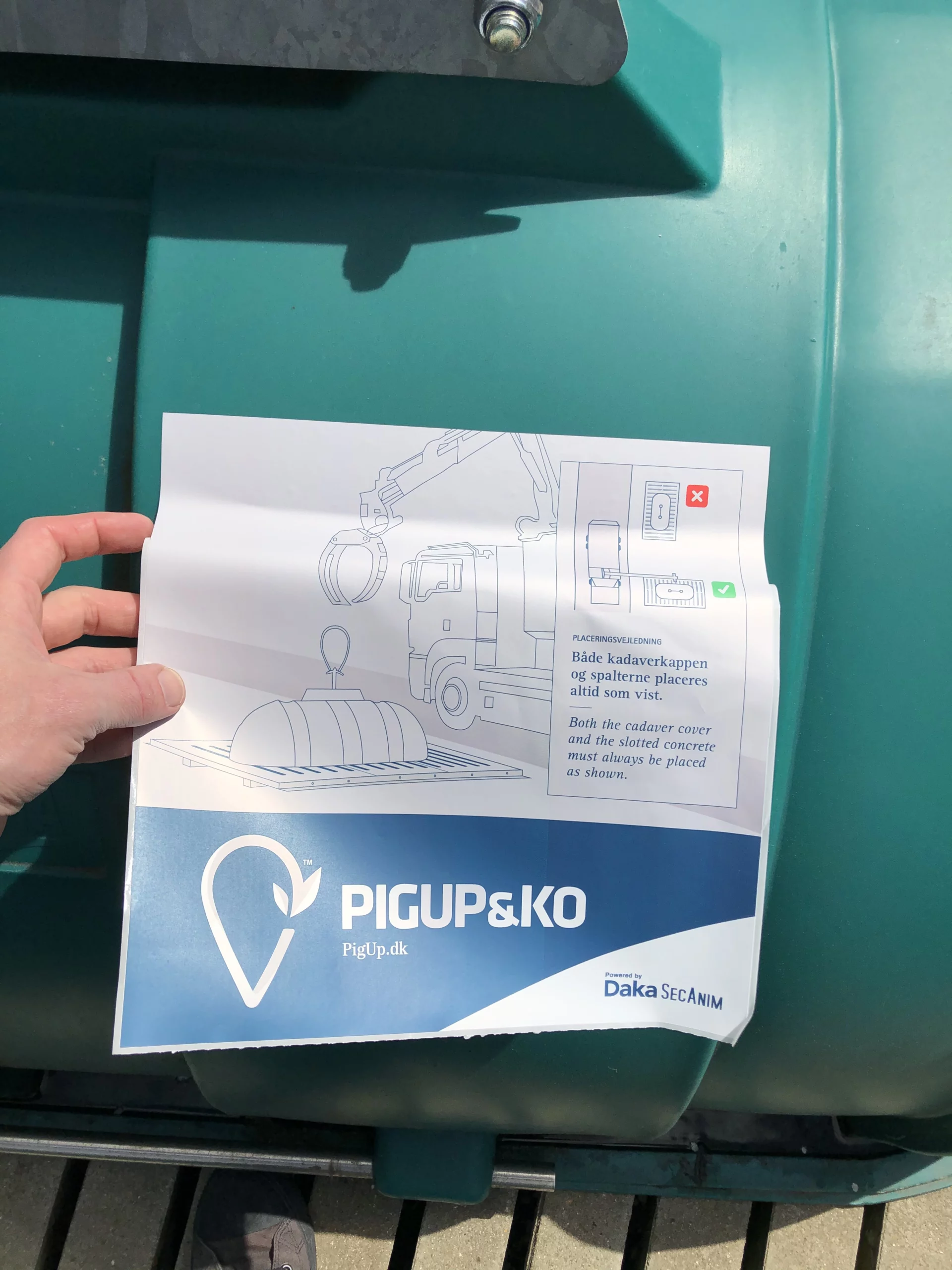
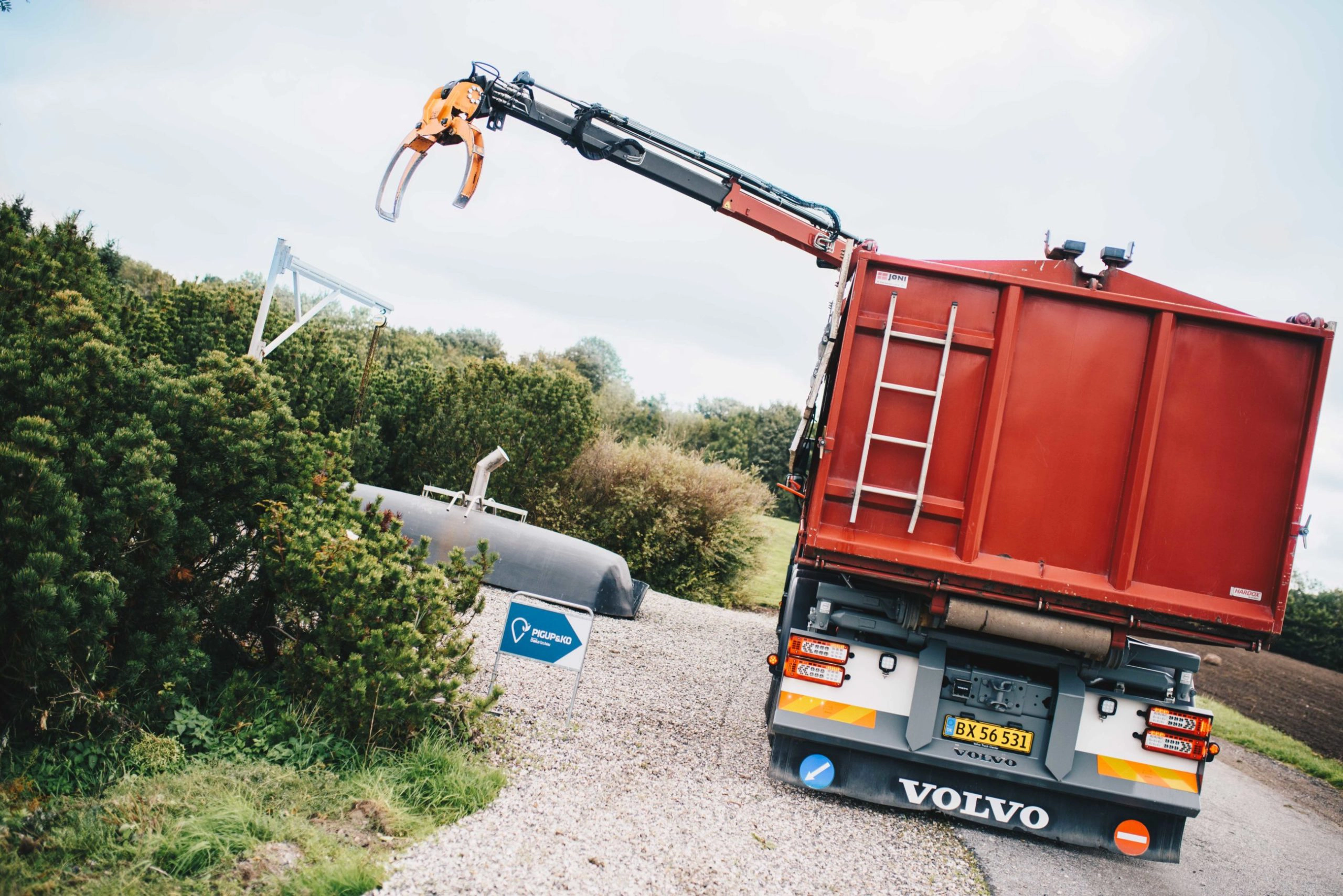
The driver carries out the collection from the platform behind the driver's cab and must therefore be able to park with the driver's side closest to the collection point. This provides the driver with the best and safest working conditions during collection.

Furthermore, there must be space to turn on the property or reverse into the collection point, as the driver is not permitted to reverse out onto a public road.

Crane and timber grap must be able to work freely during collection. Trees, branches, buildings, fences, power lines and other permanent installations must therefore not obstruct the work. As a general rule, there must be a clearance height of at least 6 metres during collection.

Animals must be placed at the collection point prior to registration.

As a general rule, animals should be located no more than four metres from the place where the lorry stops for collection.

It is recommended that animals lie perpendicular to the lorry so that the driver can easily reach them with the scraping claw.

If the animal is placed on slats, the slat openings should run parallel to the lorry. It is advisable to raise the slats by 15–20 cm using wooden blocks and secure them with angle brackets or similar. This provides a more stable lift and reduces the risk of the slats shifting during collection.

Containers and other equipment must be easily accessible at the time of collection.

There should be at least 75 cm of free space around the container so that the driver can work safely and grip the container properly with the grapple.

The container's handle must face away from the side where the lorry is parked. This reduces the risk of damage to the container during emptying.

Lids, fittings, grab handles and other components must also be intact and in working order.

Shrubs, trees and other vegetation around the access road and collection point must be kept trimmed.

At the same time, the surface conditions, access routes and equipment must be maintained on an ongoing basis so that collection can be carried out safely and efficiently.

Legal requirements for the collection point

Fallen stock must be stored in such a way that birds, foxes and other scavengers cannot gain access to them. The animals must therefore be covered or stored in a sealed container.

The collection point must be situated at a suitable distance from stables, production buildings and areas where live stock are kept. The aim is to minimise the risk of disease spreading between fallen and live stock.

The collection point must be situated on a permanent access road so that the collection lorry can reach the site and leave it.

The legal requirements on this page are based on the Executive Order on the storage etc. of fallen stock.

Read more on Retsinformation.

Equipment that works in practice

The right equipment makes collection simple, safe and efficient every day – for both you on the farm and the driver.

Do you have any questions about your collection point?

If you are unsure about the location or access conditions, Customer Service can help and, if necessary, put you in touch with our agricultural consultant.

Call 79 28 40 47.

How a collection works

Would you like to know more about registration, our planning and the rules for dealing with fallen stock?