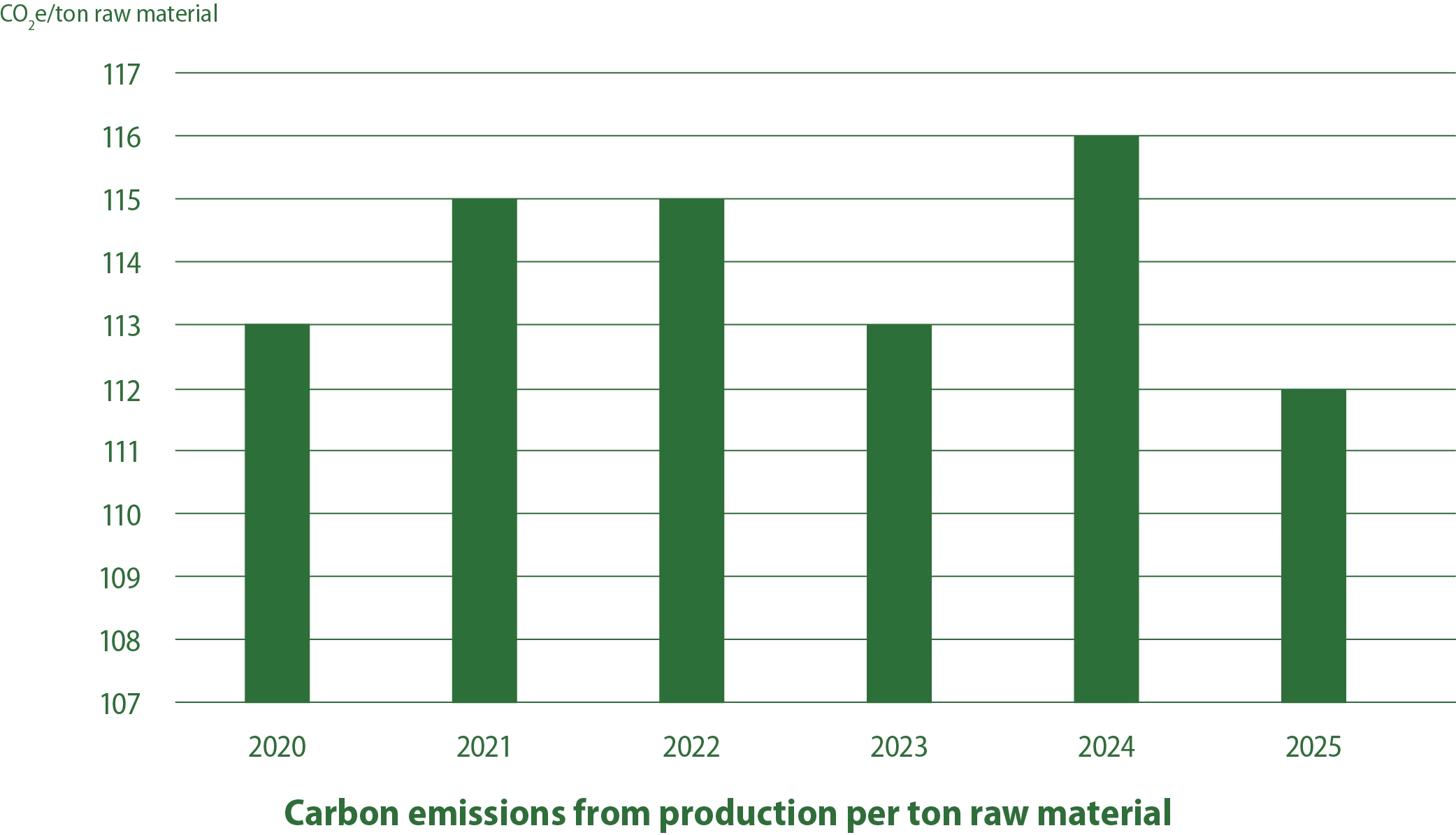
Carbon footprint

Daka's climate footprint includes both direct emissions and the effect,
our products create value by displacing fossil-based and newly produced alternatives.

Climate impact in the value chain

Our products help to displace more climate-damaging alternatives:

  • Energy products replace fossil fuels.
  • Fertiliser products replace newly produced commercial fertilisers.
  • Feed ingredients replace, amongst other things, imported soya and palm oil.

Life cycle assessments show a marked positive climate impact.

Sources of emissions

Our climate footprint stems primarily from energy consumption in production and from
transport and measured, among other things, as CO₂ emissions per tonne of raw material.

Energy in production

Processing of animal by-products is energy-intensive, partly due to the veterinary requirements in the Animal By-Products Regulation.

Choosing energy sources and technical solutions also involves trade-offs between different environmental considerations. For example, reducing NOx emissions can negatively impact CO₂ emissions.

Energy efficiency and emission reduction are therefore an ongoing focus area.

Transport

Collection of animal by-products and food waste as well as distribution of our products involve transport and contribute to our climate footprint.

That is why we are continually working to optimise routes, capacity and facility locations in order to reduce the impact of transport.

Documentation of climate impact

Daka's climate impact is documented through life cycle assessments (LCAs), which include both our own emissions and the effect of the products we replace.

The climate impact is calculated per amount of collected residual product, where displacement is included in the assessment, and the climate footprint of the waste is attributed to food production.

The calculations follow recognised international standards and are verified by independent parties.

ILUC and raw materials

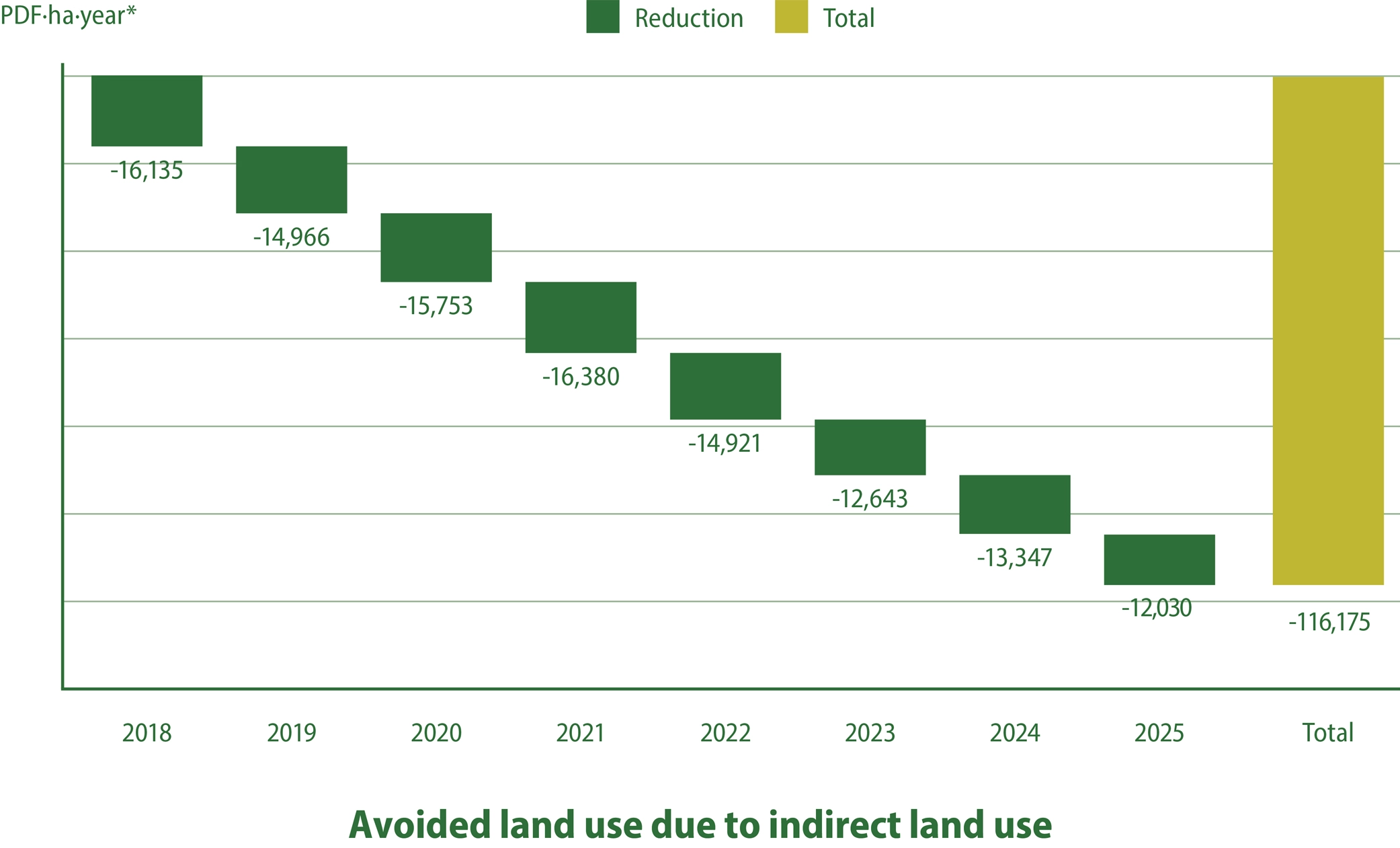
Climate impact is not just about emissions, but also about land use. ILUC (Indirect Land Use Change) can occur when agricultural land is used for energy crops, which can lead to deforestation and loss of biodiversity.

Daka's solutions are based on residual and waste streams, thereby reducing the need to use new land. This applies, among other things, to our production of 2nd generation biodiesel, which is primarily produced from animal by-products rather than cultivated crops.

Strategy and development

Reduction of climate footprint is part of Daka's priorities in operations, energy and development. The work includes both the reduction of our own emissions and the strengthening of the climate impact in the value chain through:

  • energy efficiency in production and operations
  • optimisation of transport and logistics

  • development of solutions that increase displacement

  • strengthened data foundation and documentation

Do you have any questions regarding Daka's climate footprint,
you are welcome to contact:

Rikke Klitgaard Friis

Business Development Director & Head of Sustainability

Email: rkf@daka.dk